Art
Written by Amelia Pontifex
~
Henri Matisse (1869-1954) was a French artist known for his bold use of colours, solid lines and fluid painting style. His use of vibrant colours and quick brush strokes helped define him as a Fauvist artist, and later on, one of the leading Modernist artists of his time. The Fauves (wild beasts in French) were known for their emphasised painterly style and strong use of colour. Many art historians note three major defining changes across Matisse’s life and art, these being his early years and influence of Fauvism and the French Riviera in his emphasised flattened forms and decorative patterns. The second is a much bolder use of colour and the third was when he was older and ill health meant he needed to work from bed where he created his famous ‘cut outs’.

Henri Matisse in his studio, 1913
“Slowly I discovered the secret of my art. It consists of a meditation on nature, on the expression of a dream which is always inspired by reality.”
At just 22 years of age Matisse rejected his academic studies and began training at the prestigious Ecole des Beaux-Arts. Here he learnt in a traditional and classical style. He trained at the prestigious school for a few years before leaving to train under the Symbolist painter Gustave Moreau. Before his radical change, the first few years of Matisse’s works can be seen as very much in the style of the Ecole des Beaux-Arts, with its natural palette, conservative subject matter and quiet interior scenes.
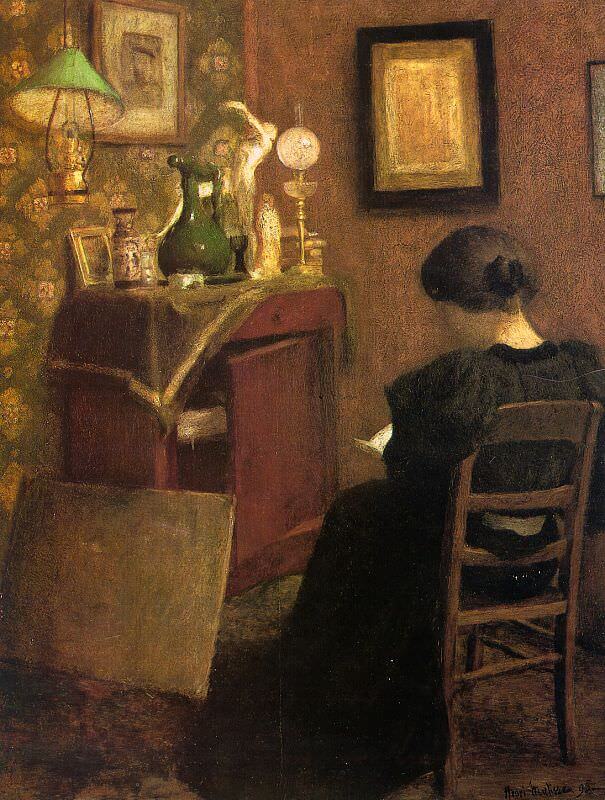
Henri Matisse, Woman Reading (1894) submitted to the Salon de la Société Nationale des Beaux-Arts.
“I continually react until my work comes into harmony with me. Like someone who writes a sentence and, rewriting it, makes new discoveries …”
After meeting Australian painter John Peter Russel in the South of France, Matisse was introduced to a radical palette of unmixed colours. With the break of the First World War, and under the intense pressure and social disruption that came with war, Matisse created some of his most radical works. In these works we see Matisse challenging the chaos and beauty that surrounded him. His works reveal an artist testing himself and testing the conventions of painting.

Henri Matisse, The Dessert: Harmony in Red
“By creating these cut-out and coloured papers, it seems to me that I go happily ahead of what is to come … But I know that only later will people realise just how much what I do today is in harmony with the future.”
Matisse first used cut and pinned paper shapes in the early 1930s, to test colours and compositions for his mural The dance 1932–33, and in 1933, when creating studies for the stage curtain for the Ballets Russes de Monte Carlo (see Two dancers). Working from a bed or wheelchair due to his fragile condition, Matisse began guiding long tailor’s shears through sheets of paper prepared with brilliant gouache. The result was the artist’s book Jazz.
Matisse thus embarked, with the help of his assistants, on an extraordinary ‘second life’, using the cut-out medium to distil the observations of a lifetime and convey a lightness that defied his physical condition. Matisse said that creating these shapes gave him the sensation of flying.
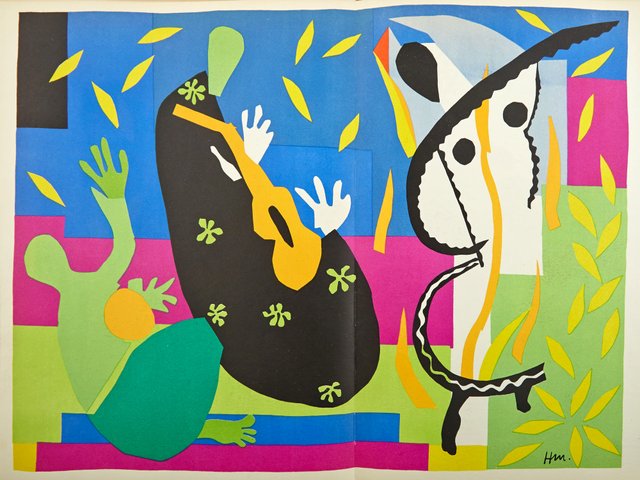
Henri Matisse, La Tristesse du roi, 1952
Reflecting on the three major parts of Matisse’s life and art, here are 8 Art Lovers Australia artists who have been influenced or noted Matisse as an inspiration in their work.
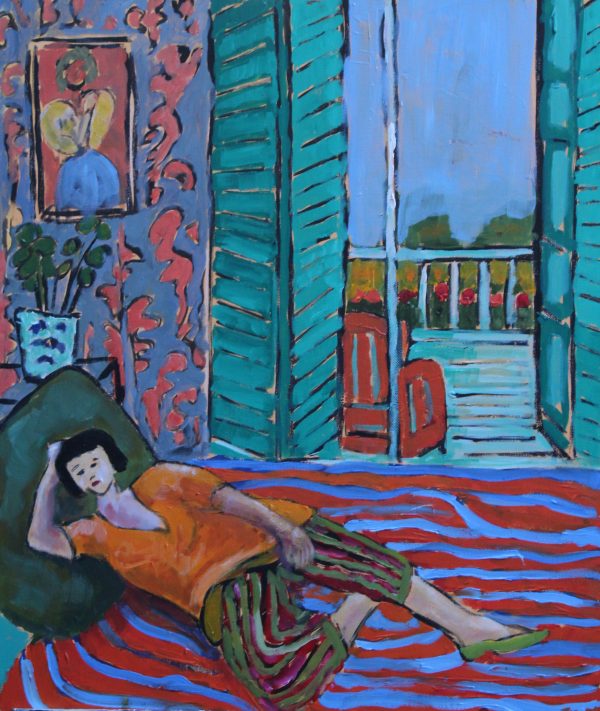
Maureen Fink, Hello Henry
Maureen Fink is an Adelaide-based oil and acrylic artist working in landscapes, seascapes, cityscapes, flower paintings and abstract paintings.
“As an Australian artist, my inspiration comes from whatever is around me at a particular time. As an example, following a recent trip to the mid north of South Australia, I produced a series of landscape paintings, which include the beautiful Eucalyptus trees and flowers from local gardens.”
~
Chelle Wallace is an award winning conceptual artist who uses photography as her medium to communicate the most honest lens to see and speak to her audience. Using the technique of Tableau, her still lifes capture seemingly ordinary experiences with emotional and collective threads.
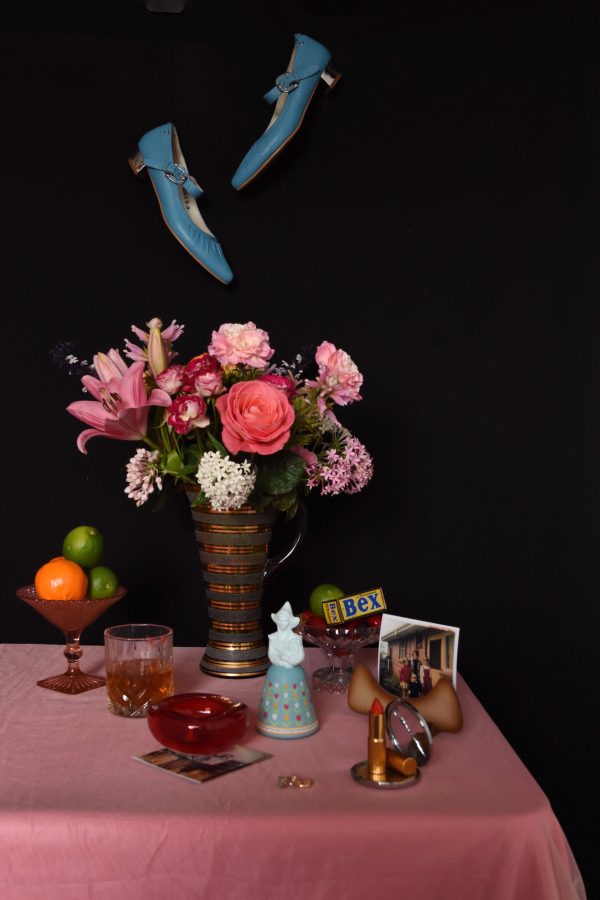
Chelle Wallace, Belles of The World- Avon Miss Netherlands
You can view Chelle’s work as part of this month’s Absurd exhibitions across our Gold Coast and Melbourne galleries.
~
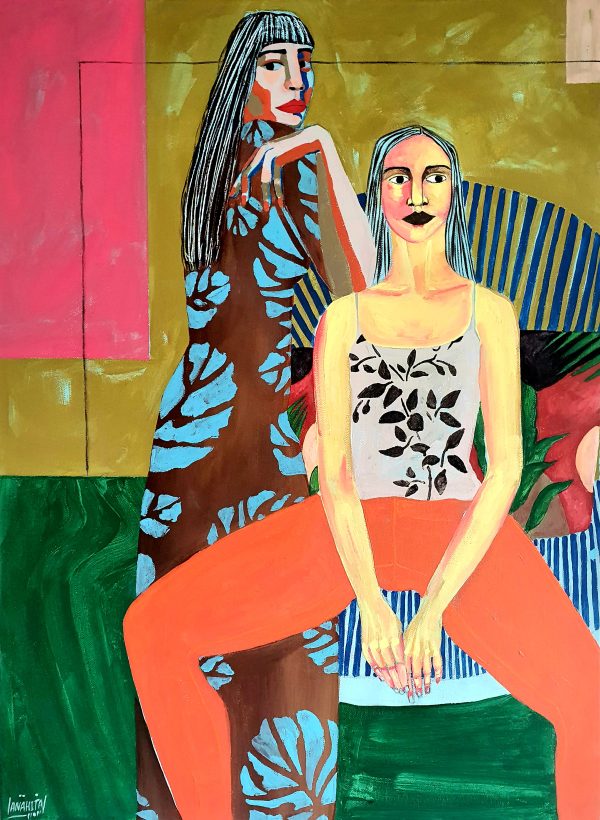
Anahita Amouzegar, Chill on a Balcony
Anahita Amouzegar has been in love with painting since she was a child. It’s the vibrant colours and movement of figures that make her work identifiably hers. Inspired by nature, the complexities of humans, emotions, and the subconscious, her works play with the reality and the ideal.
“Colours are what attracts me most and make the work feel alive. For me the beauty in painting is to bring in movements that play with harmony and gentleness.”
~
As a self taught artist, Salvatore Dibartolo has explored the use of many different mediums.
Much of his inspiration comes from nature and his travels, he has enjoyed practising and learning different techniques with a diverse range of mediums including watercolours, pastels, pencil, acrylic, oils and gouache.
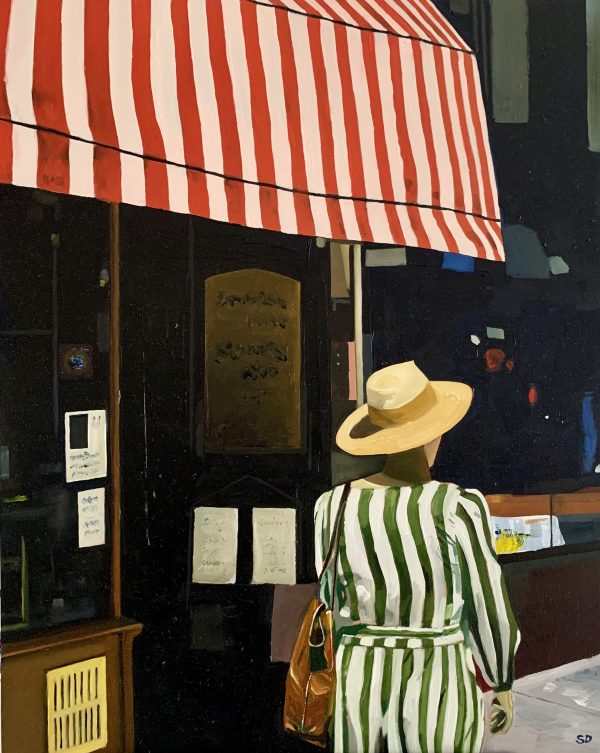
Salvatore Dibartolo, Signorina
View more artworks by Salvatore
~
Chris Cox is an Abstract figurative and contemporary Landscape Artist based in the Southern Tablelands of NSW just north of Canberra. His passion for creativity flourished early and grew from an admirable hobby to a full-time career as an artist.
Although his landscape works exhibit complexity and strategic brushwork, much of his abstract value lies in the arms of simplicity. Chris’ core focus is to ‘ capture moments ‘, most commonly the simpler, everyday moments that are often overlooked. Chris’ ongoing interest with interior design has encouraged the diverse and suitable nature of his works, both enhancing the finer spaces with delicate and medium sized paintings to larger areas with bold canvas works designed to reflect his core motives.
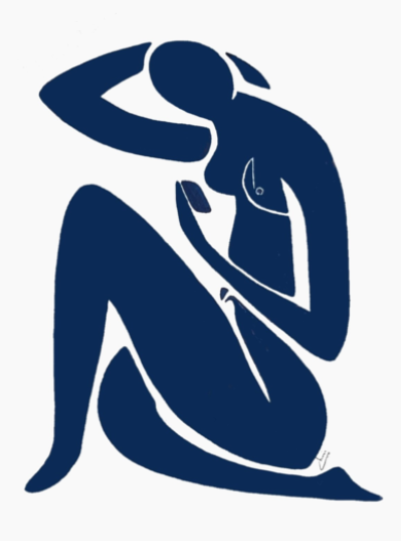
Chris Cox, Blue Nude Selfie V2.1
~
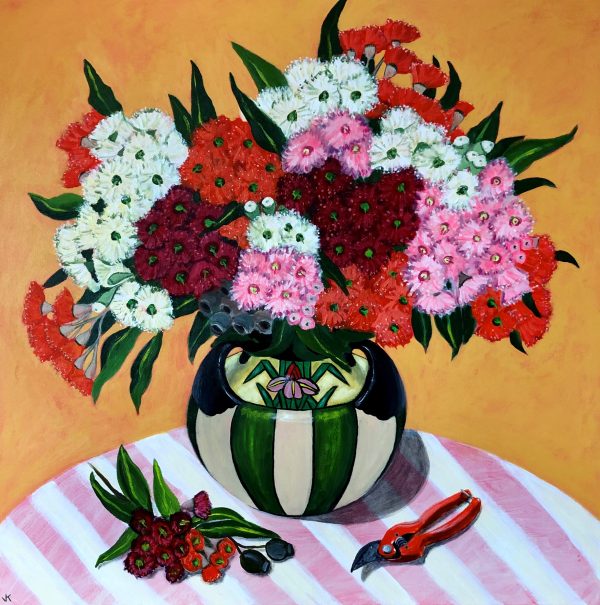
John Klein, Gum Blossoms in French Art Deco Vase
John Klein enjoys collecting various objects which often become the subject matter for his unique still life paintings. He is an avid gardener which is also reflected throughout his floral subjects.
“I have been collecting vases and other objet d’art for the last thirty years. I am most interested in the designs from the arts and crafts, art nouveau and art deco periods, and these appear regularly in my paintings. Some of the vases I own and others I covet. My gardening interest was encouraged by my father, who was also an artist and trained under the legendary Rayner Hoff at East Sydney Technical College (now the National Art School) in the 1930s.”
~
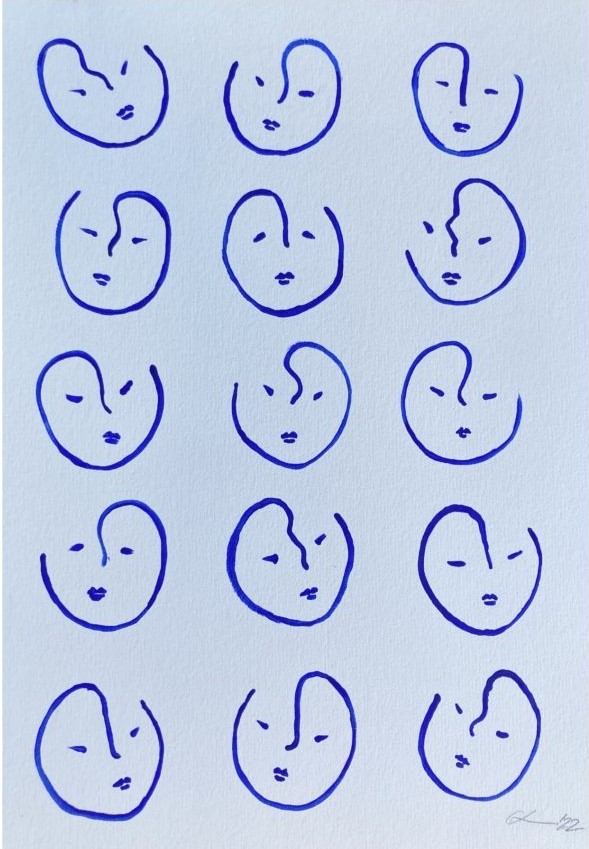
Clarissa Luk, Representational
Clarissa Luk practises art as a creative outlet while studying a double degree in Space Engineering and Law. At the young age of 21, she is enjoying experimenting with new techniques. After selling her illustration style art for over 5 years, Clarissa sought to have a more personal relationship with art. Clarissa’s current work merges the contemporary style of minimalism with her ethnically Chinese roots. This manifests in a fusion of illustrative line work and ancient calligraphy techniques. The subjects of her artworks share stories of her personal experiences reconciling two worlds, being both Chinese and Australian.
View more artworks by Clarissa
~
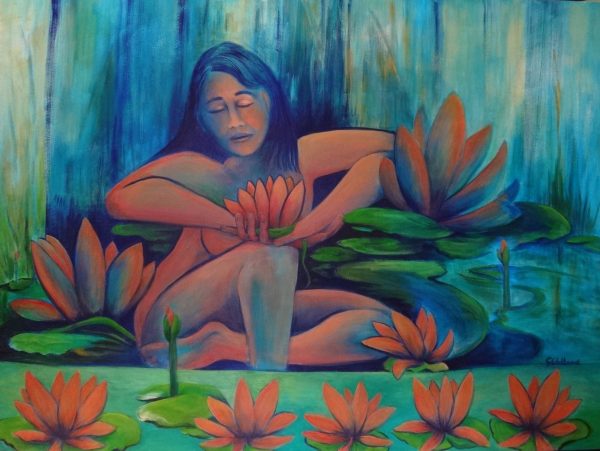
Glenise Clelland, The Special Gift
Glenise Clelland is an award winning artist who has been exhibiting her colourful paintings in Australia and overseas for over 35 years.
“I’ve always been inspired by the ever changing light on the wetlands around my studio in Noosa.”
After spending time in the Pacific Islands, Glenise was inspired by the strong colours and scenes of women and children. This inspired a Pacific series of paintings and sculptures.
~
1,000+ ARTISTS | FREE DELIVERY AUSTRALIA WIDE
SAFE & SECURE PAYMENTS | 7 DAY SATISFACTION GUARANTEE




 Free delivery Australia wide
 7 Day Satisfaction Guarantee
 Safe & Secure Payments