Written by Anna Itkonen
~
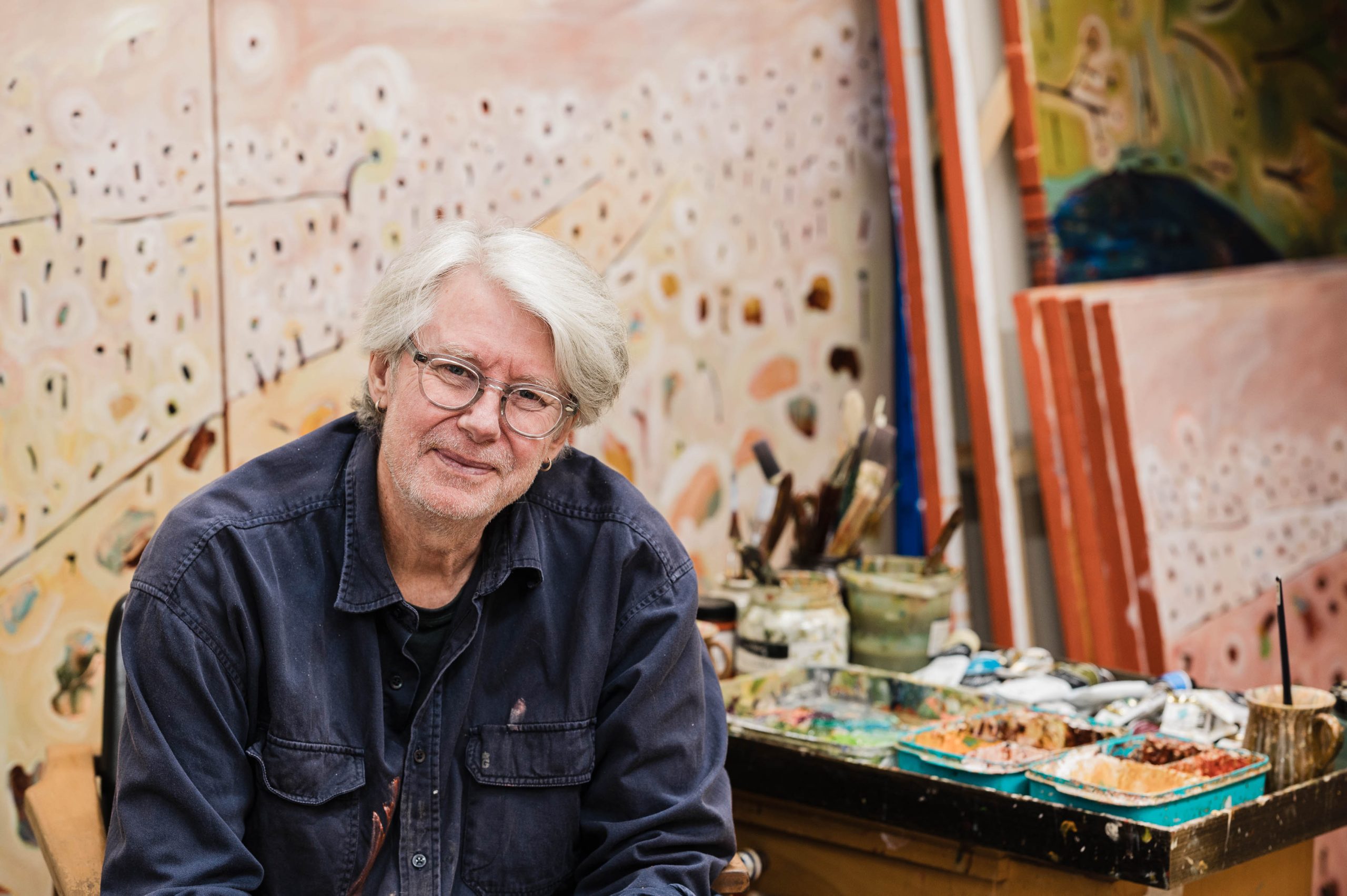
Michael Wolfe
What is it about landscapes that appeal to you, and how do you construct your paintings?
I am a wide-open spaces kind of painter. That’s the thing that I really find most satisfaction in; the enduring themes in my work are wide-open spaces. I choose to paint quite intimate paintings, which are still broad in scale. My art is very much about those desert tones, the sort of reduced, stripped-back landscapes where the mark-making is quite bold and graphic and calligraphic. It is that sort of reductive language that I find most appealing.
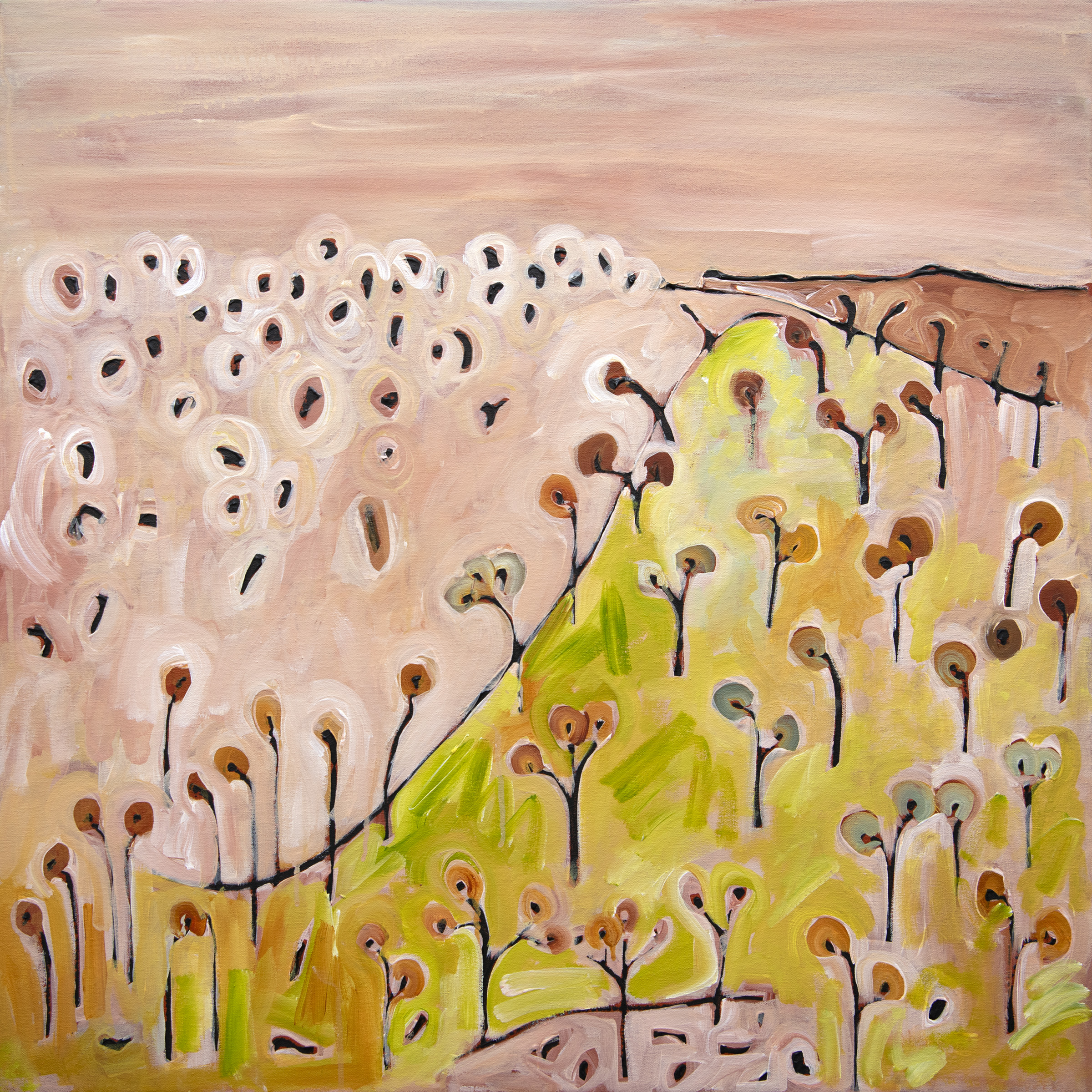
Leanganook 2 | 81 x 91cm, Acrylic on canvas, Framed in Mountain Ash
It is a very primal form of mark-making that relates to the very primitive landscapes. I have been revisiting quite a lot of those desert landscapes, which I have painted over a really long period of time. In the early nineties, I started by going to Alice Springs, travelling up through the desert, and going out along the Larapinta trail in the West Macdonnell Ranges. It has been an enduring fascination for me since. It looks like nature’s own landscape designer has been at work. There is this rhythm and deliberate placement of objects, which, in my paintings, became a conversation between chaos and order. And so it has been for the last 20 years.
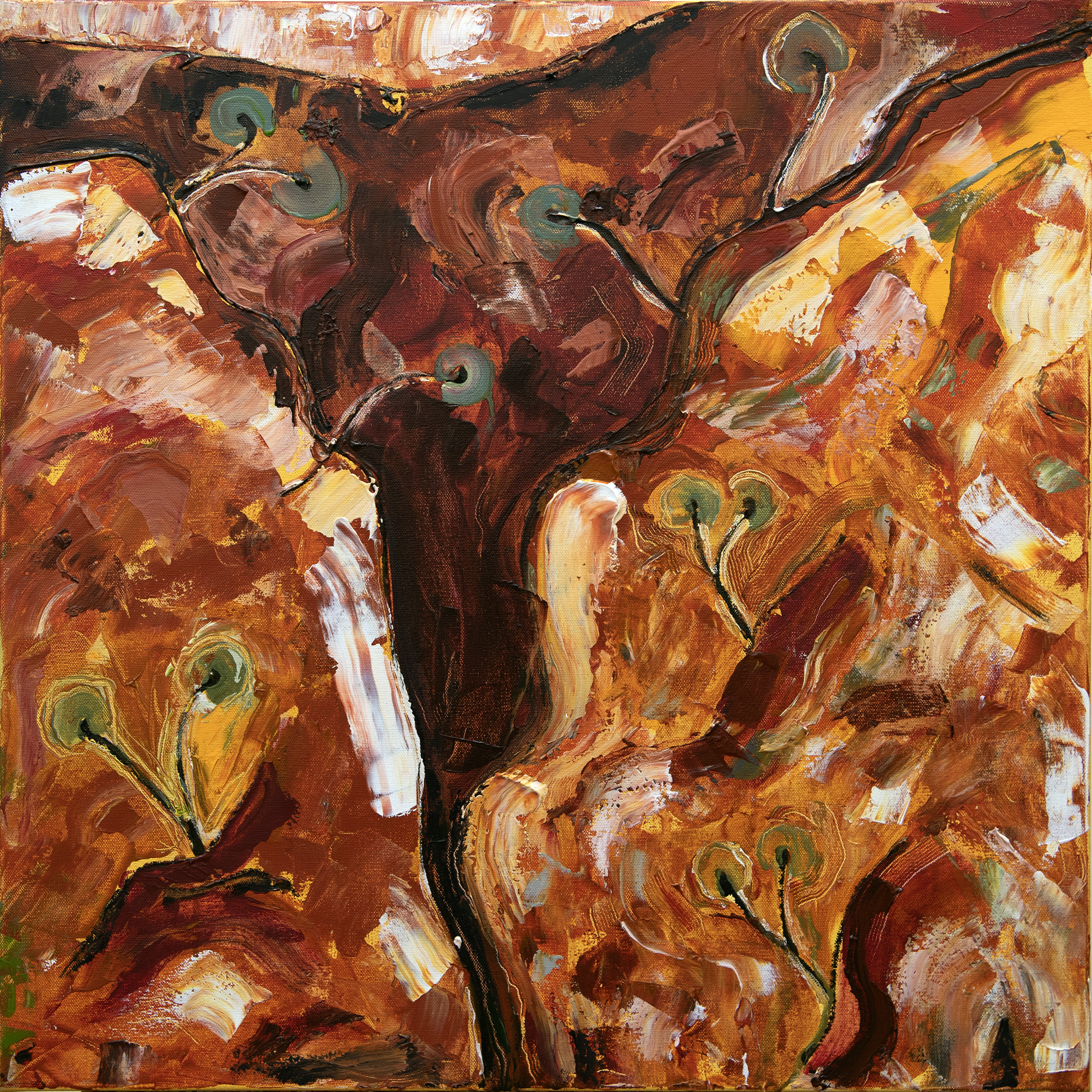
Larapinta 1 | 61 x 61cm, Acrylic on canvas, Framed in Mountain Ash
Brighter, more colourful landscapes don’t draw me in as much as the desert landscapes and the landscape around where I live in central Victoria. There are not those burnt oranges and red and yellow ochres. I often find that I try to find a high spot [in the landscape], some high ground and look out across the simplified, reduced landscape. And that is the rhythm of my landscapes predominantly. It is the fence lines and the tree lines and the gullies, the trees running up and down hillsides. A tropical landscape has gorgeous outlooks filled with foliage and trees and treetops, but the rhythms of those hills and mountains don’t tend to have enough definition for me.
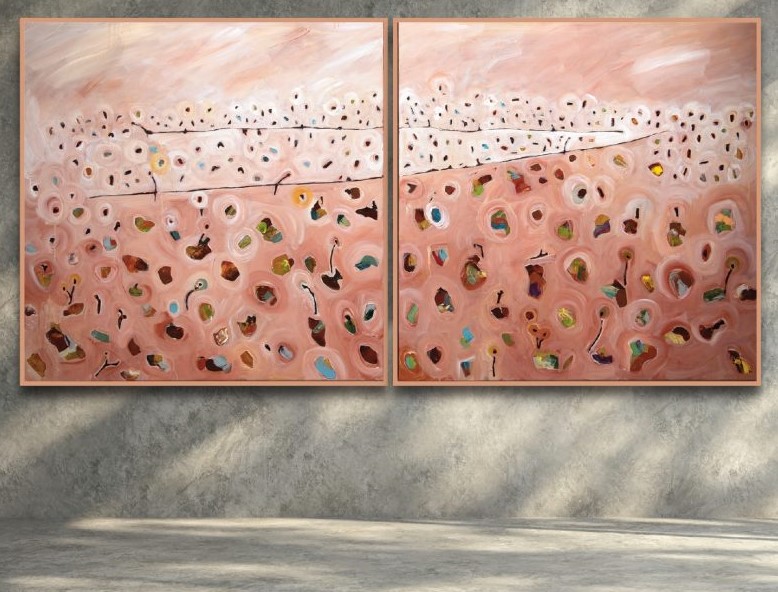
Heartlands 3 – Diptych | 202 x 101cm, Acrylic on 2 canvases, Framed in Mountain Ash
How do the elements and details come together on the canvas? What is it about specific details of the landscape that talk to you?
I am very drawn to music. In my studio, I tend to play quite abstract music: classical music, modern string quartet music, fifties and sixties jazz or something else very rhythmic. Music with technique and a solid grounding in the basics of composition, dynamics and form. However, it is ultimately about chaos and how to manage that relationship between chaos and order.
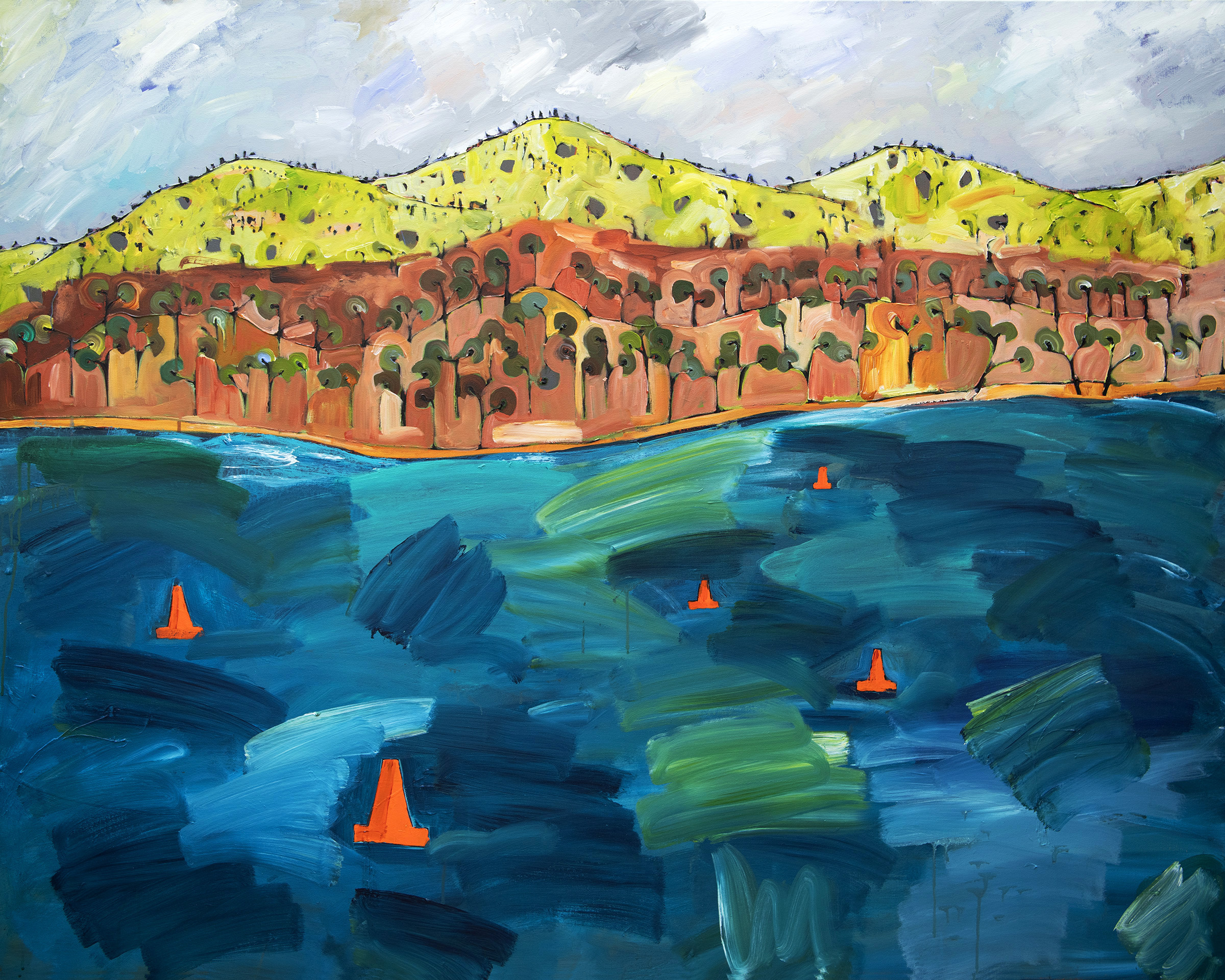
North Harcourt | 152 x 122cm, Acrylic on canvas, Framed in Mountain Ash
The background, for me, is always a kind of musical score, which then comes into the composition of the painting. If the notes on a page represent musical notes and forms that are interpreted by the musicians on their instruments, then the kind of notes on the canvas, for me, is a very reduced and stripped-back notation, which then is filled and brought to life by an energetic vital approach to painting. That notation is a form of handwriting that I am drawn to.
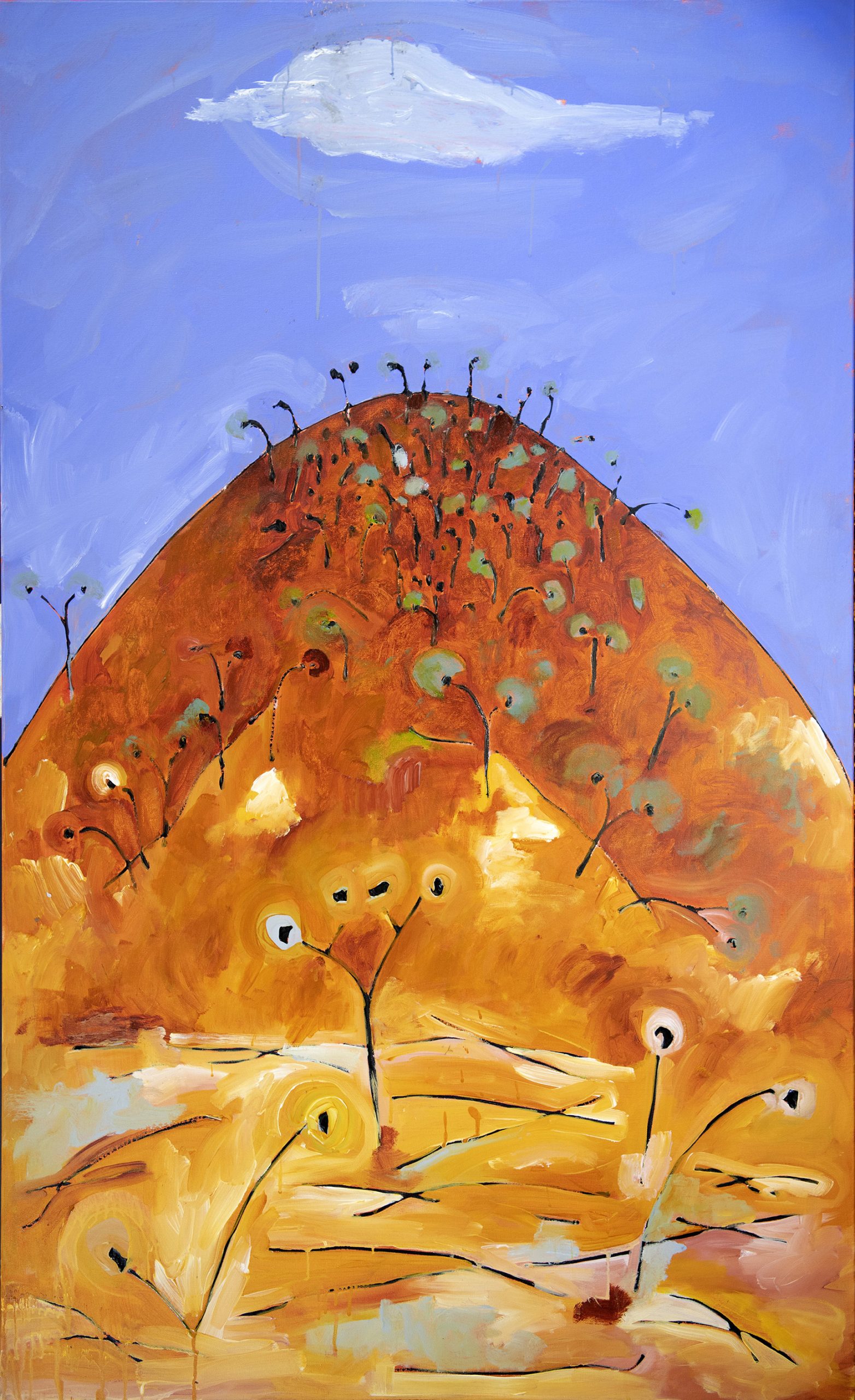
Signal Hill I | 91.5 x 152cm, Acrylic on canvas, Framed in Mountain Ash
I really love being in front of the canvas and not being fearful of the blank canvas, but embracing that and having a dynamic, energetic relationship with mark making, composition and colour. I love an energetic approach to painting with moments of quiet, subtle details, and finesse, and bolder, looser, and more gestural moments when I really embrace the physical activity of painting. In those moments, I use very thin washes and bigger brushes, really get in there, get dirty and slop it on. These moments are then followed by the finesse. My relationship with painting is a very physical and energetic one, and I want my paintings to be energetic and to have a vitality in them.
I paint a very small part of the landscape, specific details because the landscape in itself is overwhelming and big. That is what I have found about painting the desert as well; it is just so big that to try to take it all in, I don’t think I could capture that, but I can capture moments.
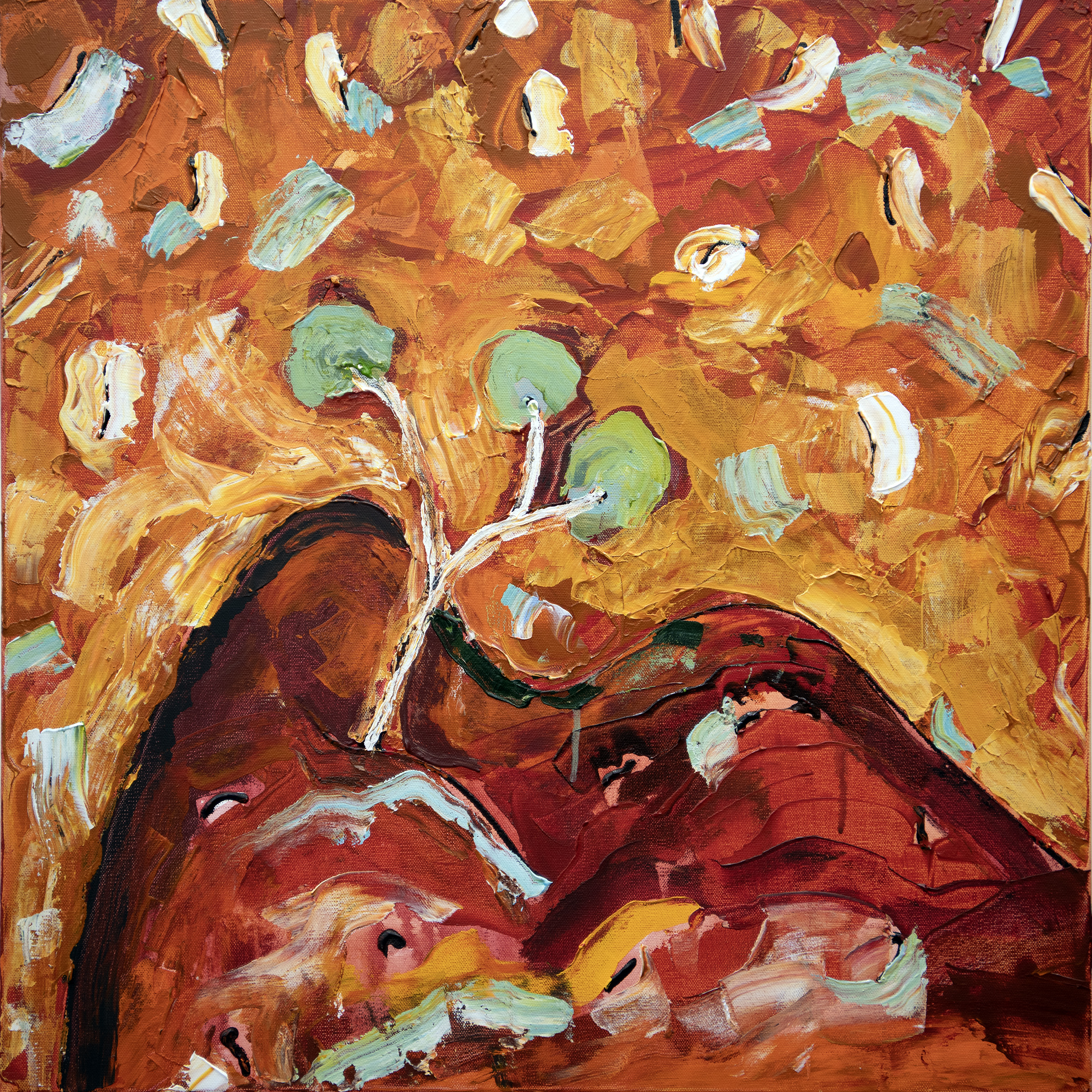
Larapinta 3 | 64 x 64cm, Acrylic on canvas, Framed in Mountain Ash
Where do the roots of your painting lie? How are those reflected in your canvasses nowadays?
My painting came out of my printmaking, and for the first ten years after I left art school, predominantly, what I did was printmaking and printmaking. While it can be textural and tonal, what I was mostly doing was works that were graphic and bold. And so the kind of mark-making that was in that printmaking became the basis of my painting. My painting is a combination of graphic mark-making, tonal colours and flattening of the perspective.
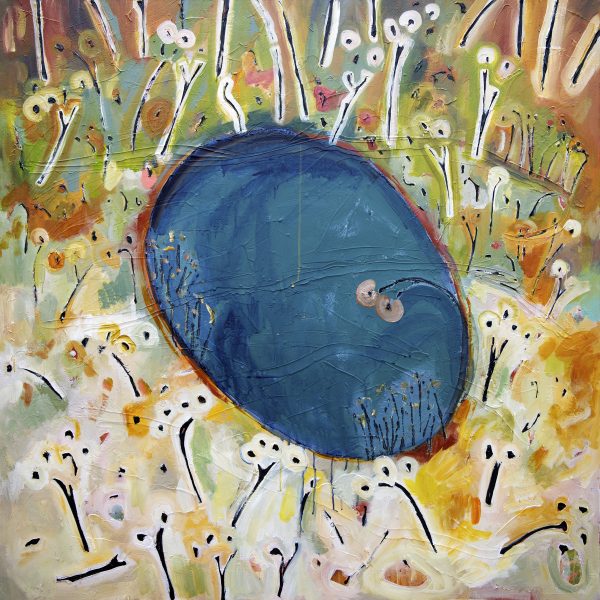
Kalimna Waterhole | 122 x 122cm, Acrylic on canvas, Framed in Mountain Ash
Looking at a landscape, how do you recognise the important details in the landscape? The ones that you will paint, the ones that talk to you?
I am very drawn to the idea that you can put all the marks and features of the landscape right at the front of the picture plane and only suggest a very small amount of perspective. Mostly, what I’m trying to suggest is the idea of being dwarfed by the landscape. Even though I’m only taking a small section of it, there is the idea of being against a 2000-metre mountainside, the idea of being quite insignificant. It is about scale and the overwhelming beauty of nature.
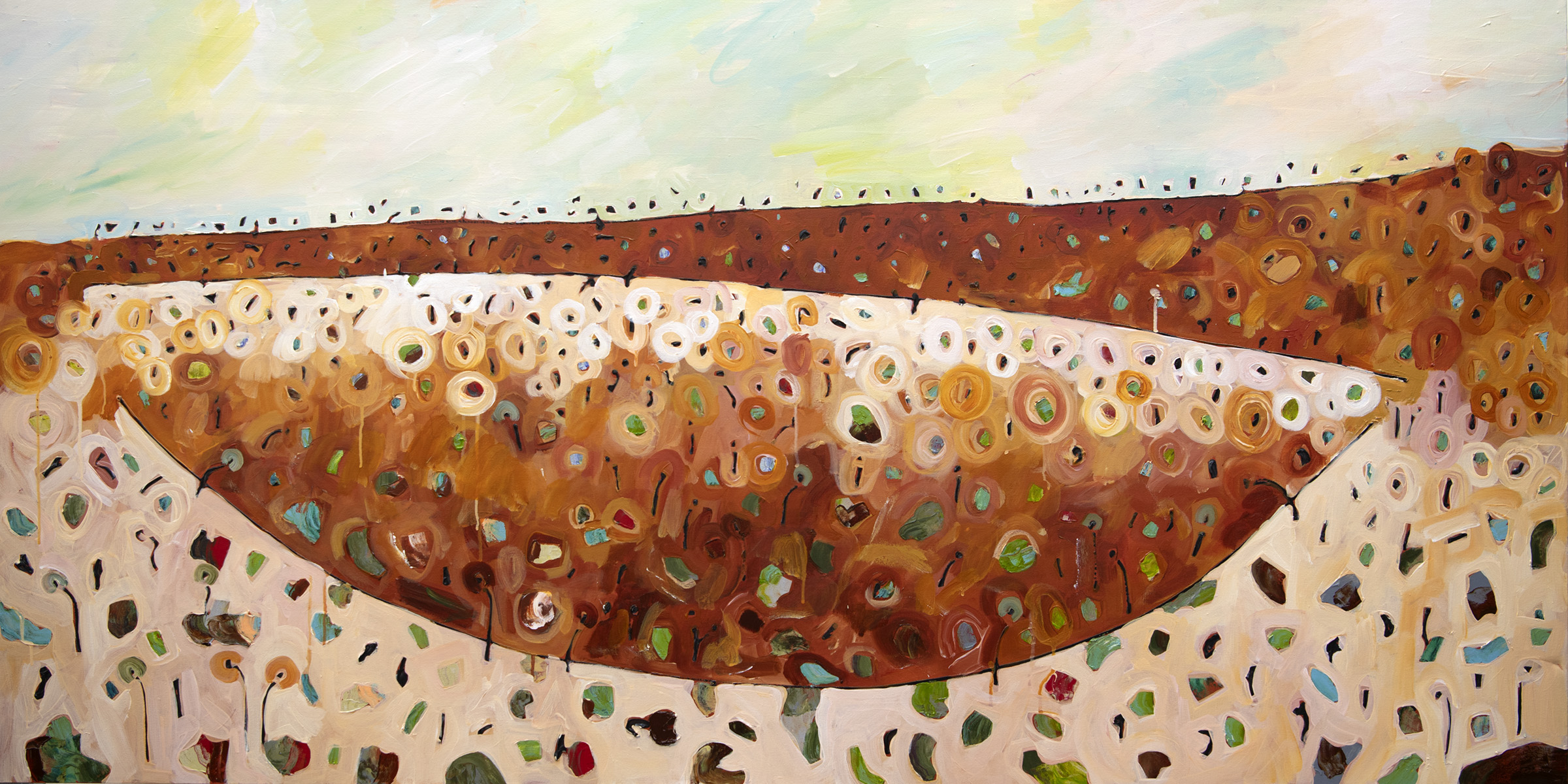
The Broken Sky 7 | 183 x 91.5cm, Acrylic on canvas, Framed in Mountain Ash
What are you working on currently?
I am currently working on a series that is really an extension of the Broken Sky paintings. It is a series on Leanganook, a mountain theme I have revisited many times. It is covered in granite and much of the granite that Melbourne was built on came from Harcourt, which is where Mount Alexander and Leanganook are. I capture small, beautiful areas of gullies and gorges, and Leanganook has those everywhere. And again, it’s that kind of sparseness with forest and that relationship between the horizon and the sky and the land and the forms that always interest me.
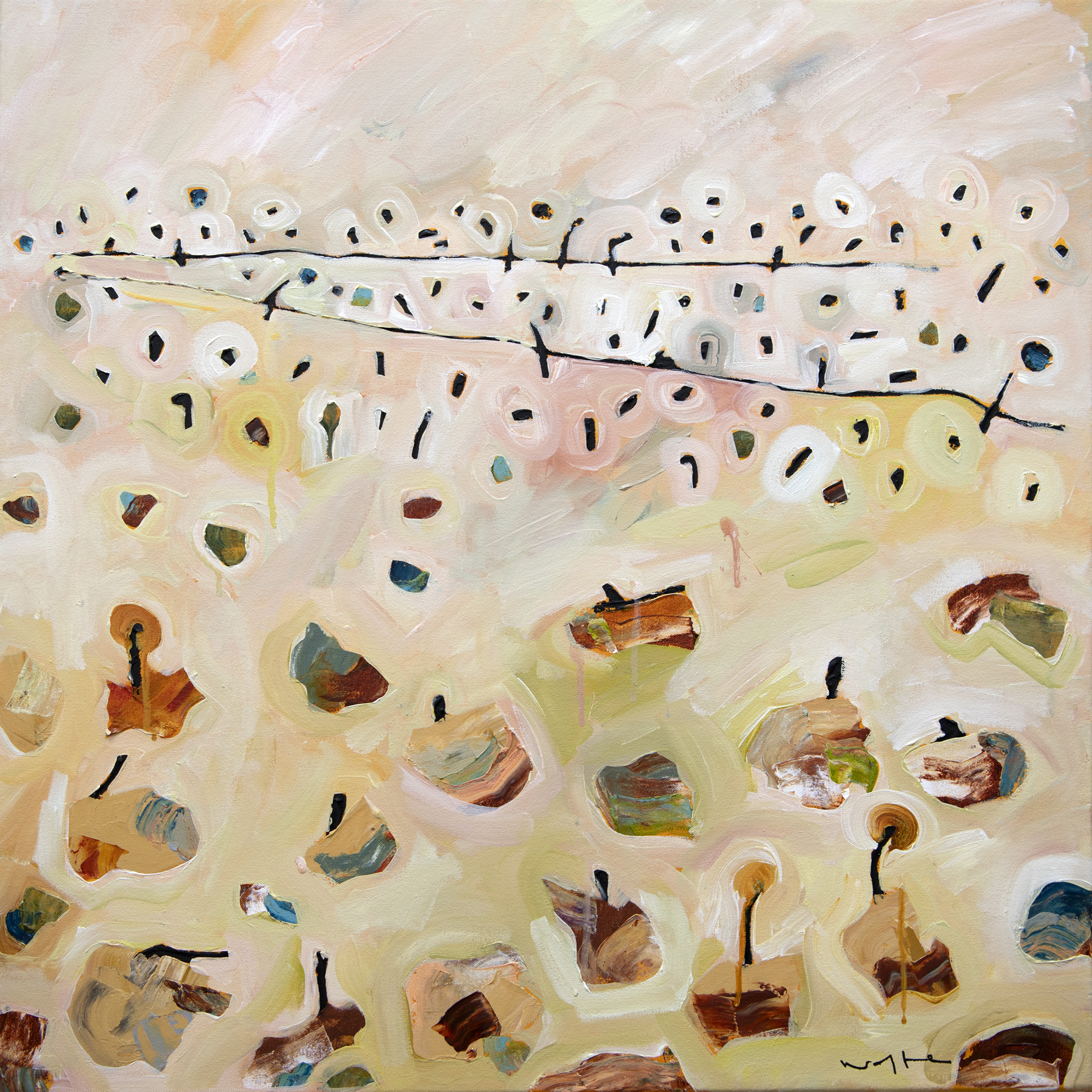
Leanganook 1 | 72 x 72cm, Acrylic on canvas, Framed in Mountain Ash
What’s next for you artistically? Is there something you are looking to experiment with, explore, fine-tune or perhaps re-visit?
My art has not changed profoundly in the past 20 or 30 years, but it is constantly evolving. With my current work, what I have done is a whole lot of very simple thumbnail drawings, drawings of the landscape forms, looking at different ways to reduce the amount of information that I am putting into the paintings. It is a very simplified form of handwriting, so to speak.
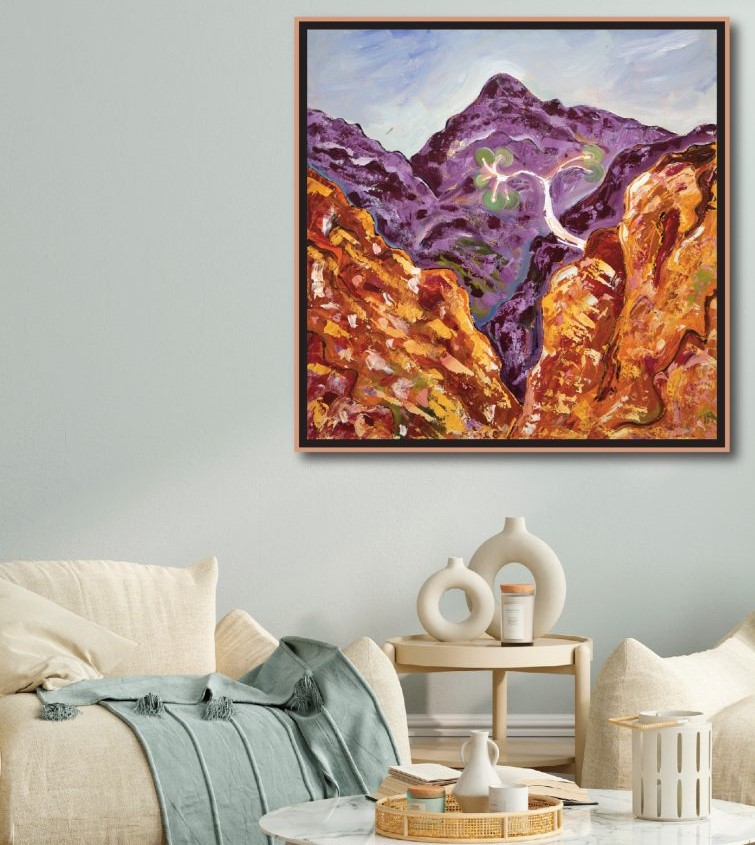
Larapinta 8 | 61 x 61cm, Acrylic on canvas, Framed in Mountain Ash
I have worked on a series of drawings, and I’m working on about ten paintings now. With this series of works, I find that one painting will suggest the next. There are little moments of discovery, little nuances and relationships between gestures, marks, colours and forms that suggest something for the next painting. The last painting gets me to the next one, which is the evolution.
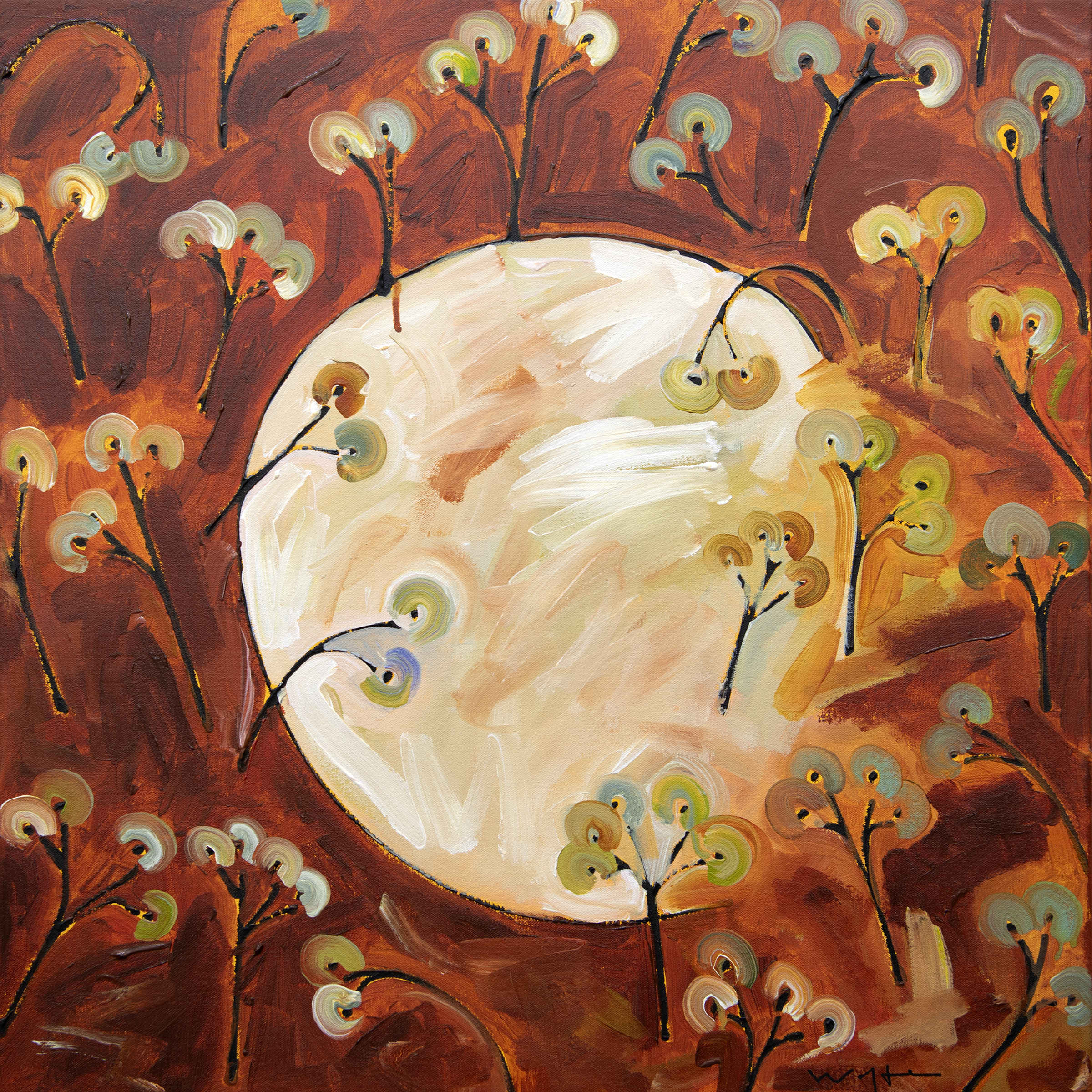
Moonlight Flat | 61 x 61cm, Acrylic on canvas, Framed in Mountain Ash
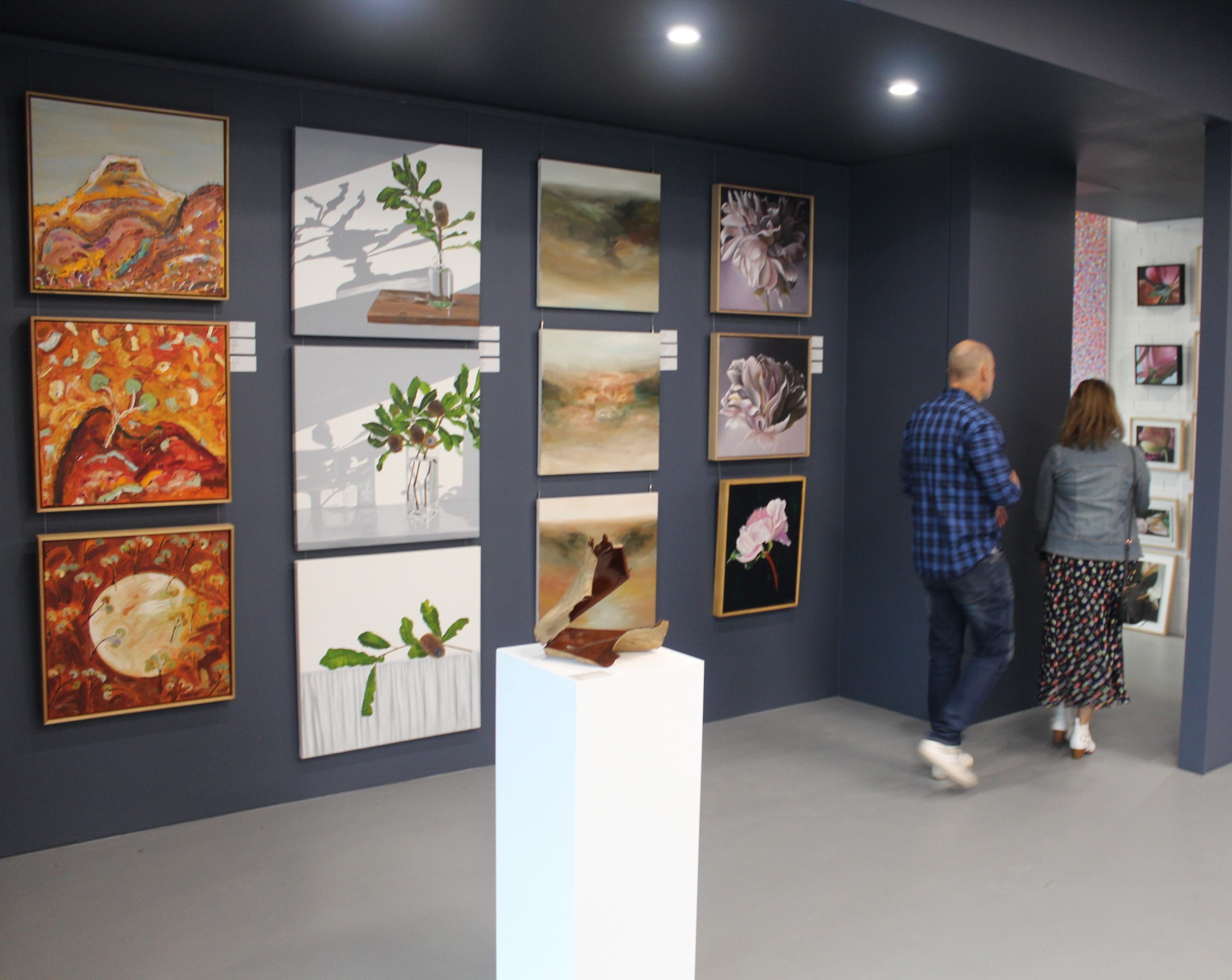
When a group of works is shown with contemporary methods, it changes what and how you see it. In a physical gallery, a series of works is either thematically similar or has come from a conceptual framework. You would look at them all together and get a sense of what the relationships between the paintings and the forms were, perhaps even the concepts.
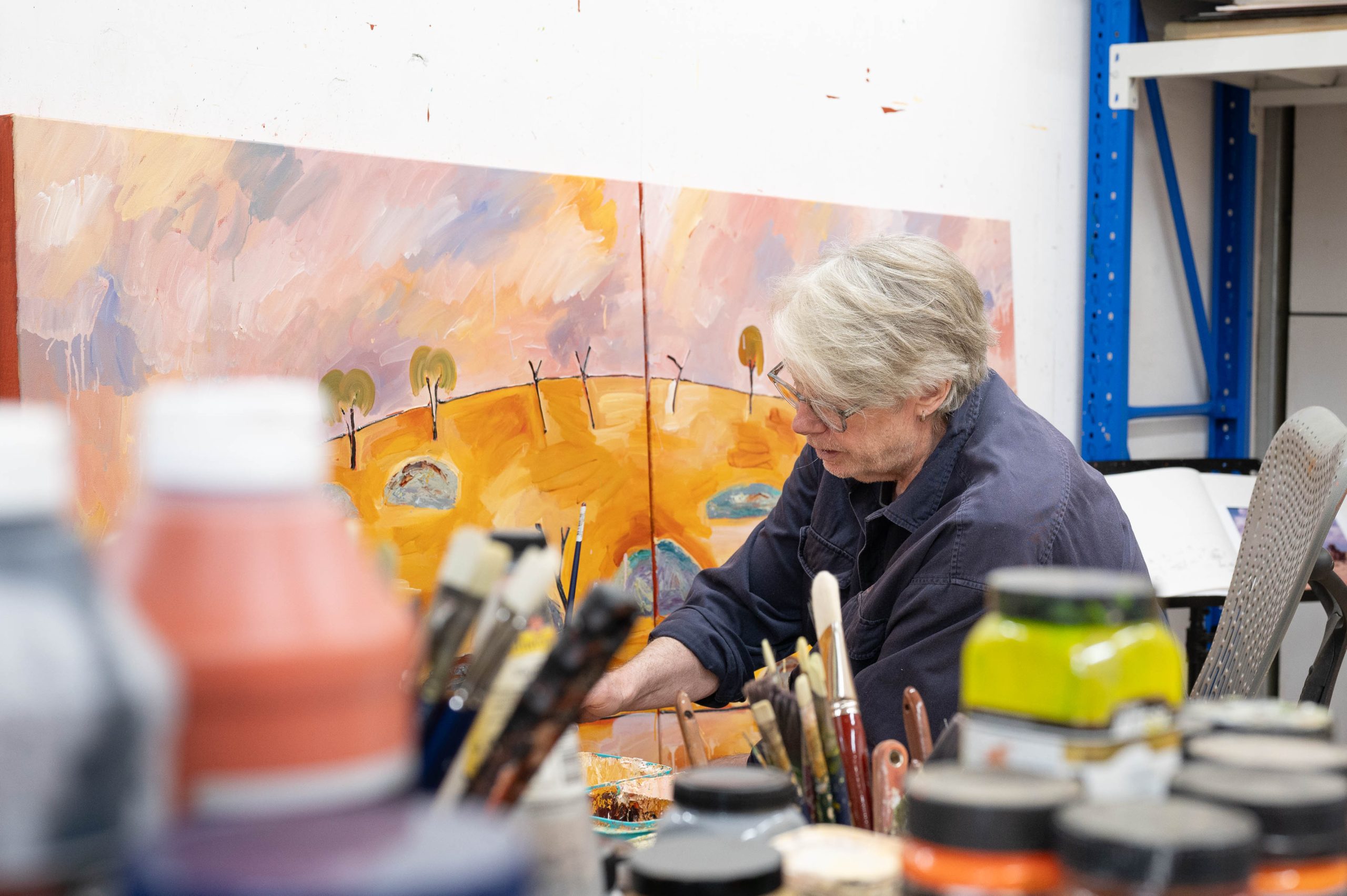
I am not a narrative painter or a representational painter. I don’t tend to paint narrative as much as I paint form. How work is shown now has meant that I don’t often get a chance to do a large group of work and sit with them in the studio or get a chance to hang them together. The physical relationship shows where my mind is, which comes across in my work. This is what I aim to paint now.
~
FREE DELIVERY AUSTRALIA WIDE
1,000+ ARTISTS
SAFE & SECURE PAYMENTS | 7 DAY SATISFACTION GUARANTEE