Art
Written by Krista Worthington
~
Redesigning a room is an intimate and creative act. It expresses who we are and what we love. And art, in all its forms, is a timeless mediator in this dialogue between personal space and identity. Among various art genres, abstract art has seen a surge in popularity due to its non-representational nature and its capacity to speak volumes without words.
In this post, we will explore how statement abstract art can be the central piece in completely altering the feel and mood of a room. We’ll shine a light on the psychological impact of abstract art and provide insights for selecting the perfect piece for your space.
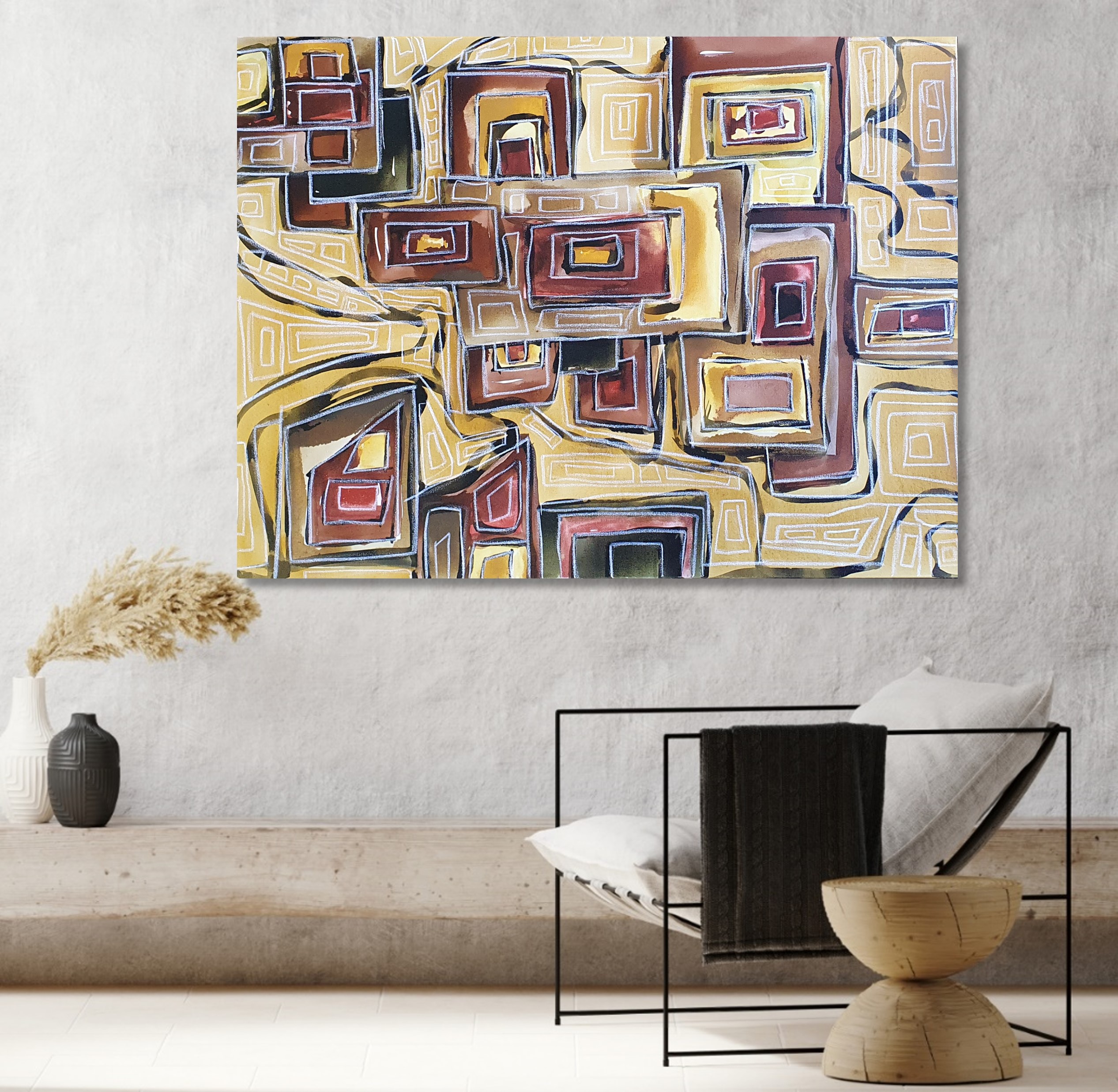
Noosa “Paths” by WAYNE CLAYTON
Every room tells a story, and the art within it serves as both the narrator and the protagonist. Abstract art doesn’t merely fill a wall; it engages the viewer’s imagination, inviting them to explore the depths of form, colour, and emotion. When used as the centerpiece of a redesign, abstract art can transform an environment from mundane to captivating.

Anticipation by MADELEINE MCKINLAY
The choice of colours and shapes in an abstract piece is crucial. Warm, vibrant hues can inject energy into a serene space, while cooler tones bring a sense of calm to a lively area. Geometric shapes might resonate with a modern, structured setting, while organic forms can soften minimalist decor. Think of the art as a conversation partner with your room; the colours and shapes dictate the tone of the dialogue.
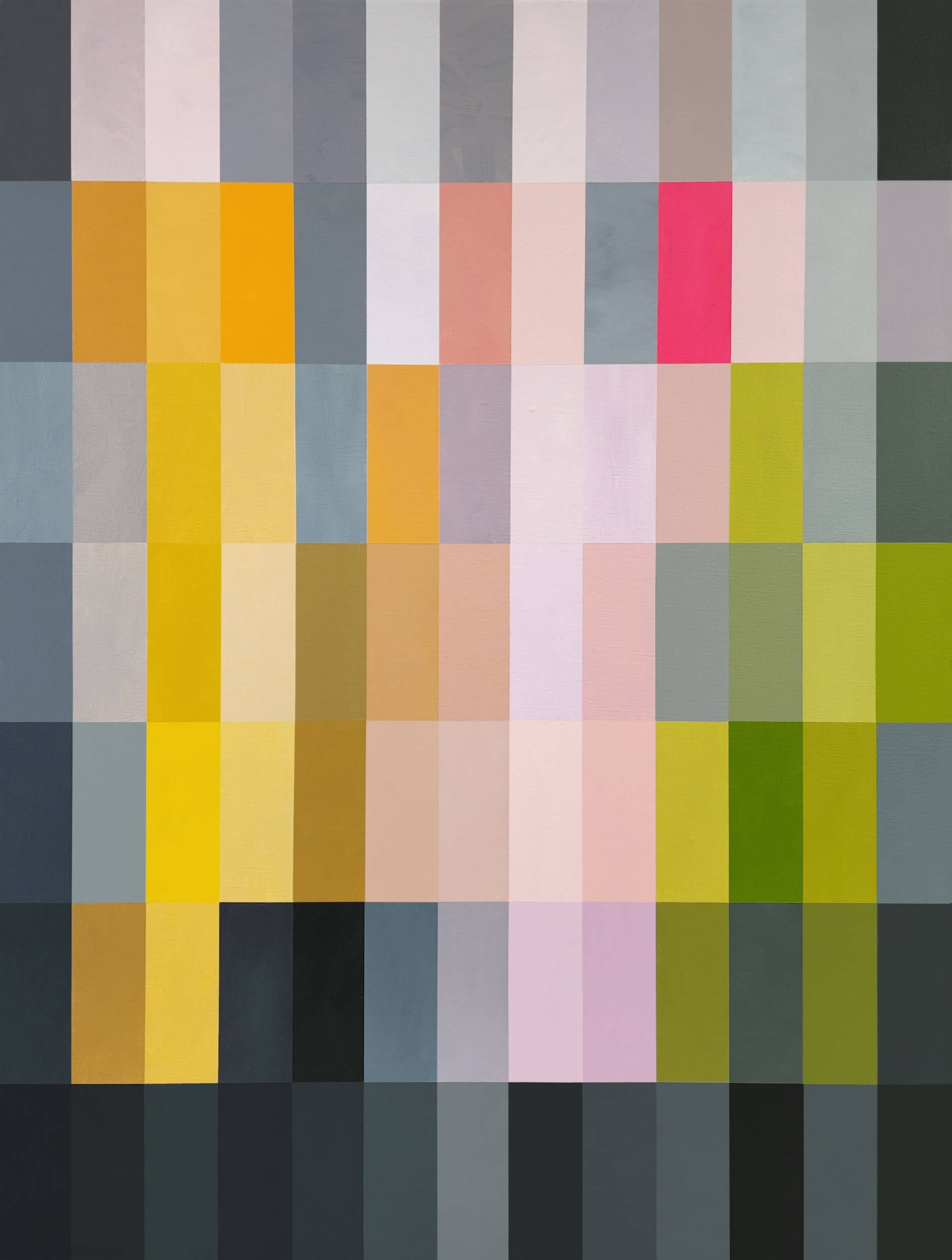
Tell Me More by INDIE DRAKEN
Art is a conduit for emotion, and abstract art takes this tenet to its most malleable form. Without the constraints of a recognizable subject, abstract art can convey a wide range of emotions, often mirroring the viewer’s inner landscape. When you select an abstract artwork, consider how it makes you feel and how that feeling will enhance the purpose of the room.
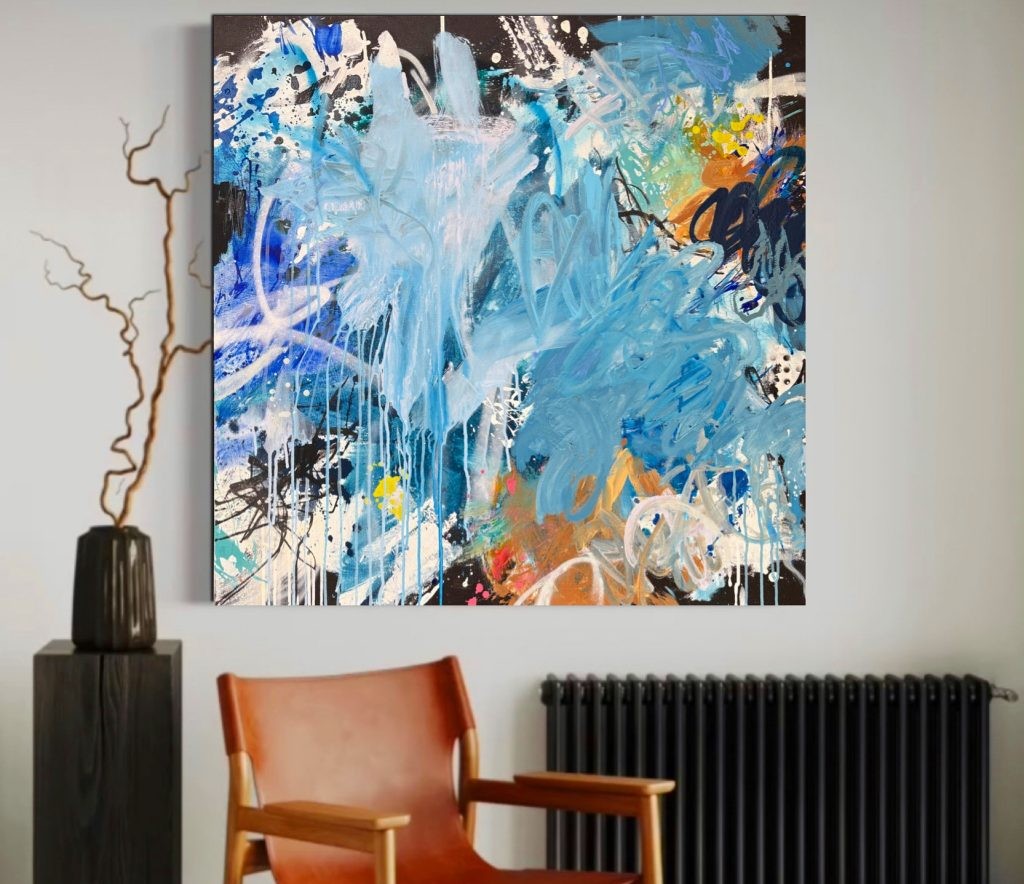
Blue Sundae by BRENDAN WALSH (COLDGHOST)
Selecting the perfect abstract piece for your room can be an exhilarating, albeit daunting, task. It requires you to consider the art in the context of the room’s purpose, existing decor, and your personal taste.
The first step is to assess the space where the art will be displayed. Measure the wall you wish to adorn and envision the size of the artwork within that context. A common mistake is choosing a piece that is either too small and gets lost or too large and overwhelms the room.
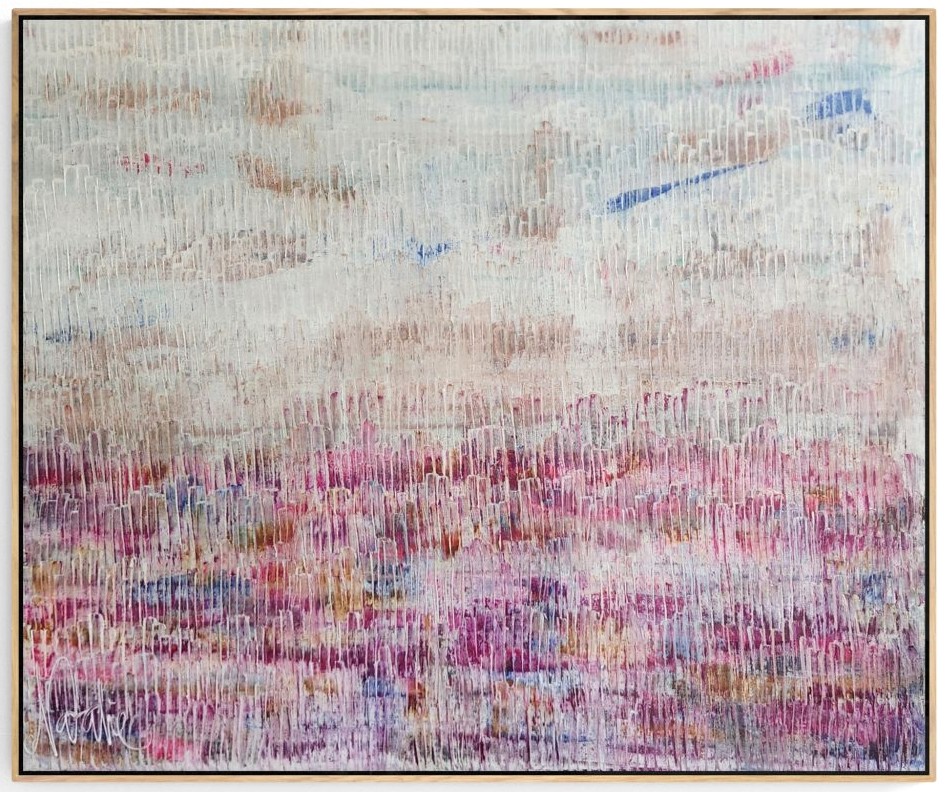
Cupid Hit Me With Precision by NATALIE UHRIK
Your abstract art should complement the room’s existing elements. If your space is full of large furniture and patterns, perhaps a minimalist piece with a strong focus on colour is the way to go. For open, airy environments, a more intricate design may serve as a focal point without cluttering the visual field.
While there are principles to guide your decision, art is ultimately a reflection of personal taste. Your room must resonate with you on an intimate level. If you’re drawn to the chaotic beauty of abstract expressionism, don’t be afraid to incorporate a bold, gestural piece that speaks to your individual aesthetic.
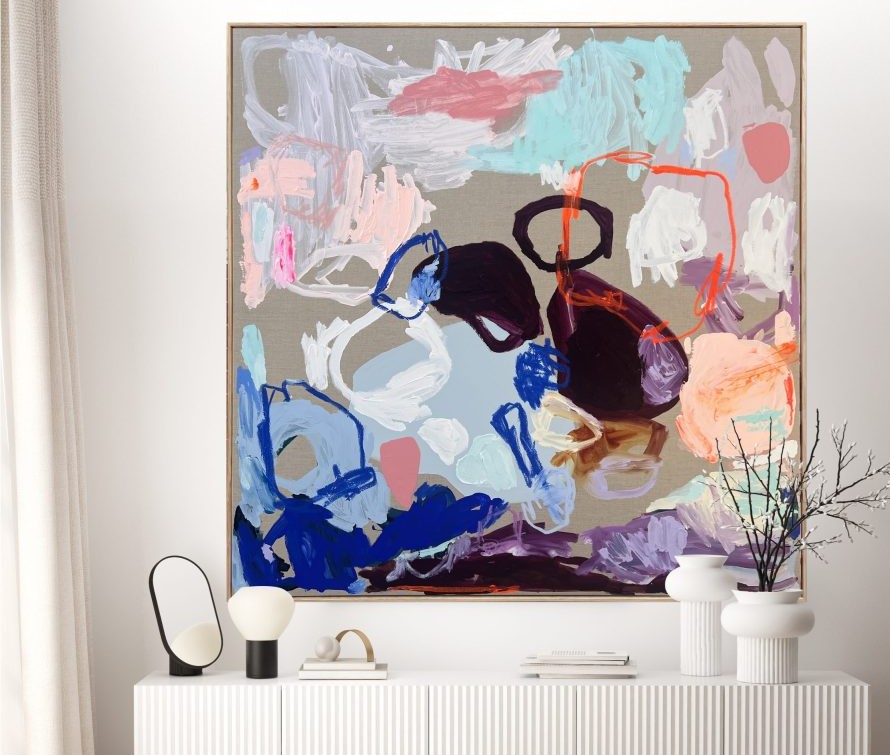
Don’t Rain On My Parade by REBECCA KOERTING
Art is as much about the experience as it is about the object. Once you’ve chosen and installed your abstract piece, ensure that it stays connected to the room and its occupants over time.
Light can dramatically alter the appearance of art, especially abstract pieces that play with shadows and highlights. Experiment with different lighting setups to find the most flattering for your artwork. Consider spotlights for a gallery-like effect, or indirect light to softly emphasize the piece’s presence.
To prevent your abstract artwork from becoming ‘background noise’, rotate it with other pieces in your collection periodically. Each rotation can redefine the space, introducing fresh energy and new narratives. It’s also an opportunity to reevaluate the room and potentially update other elements to enhance the art’s new context.
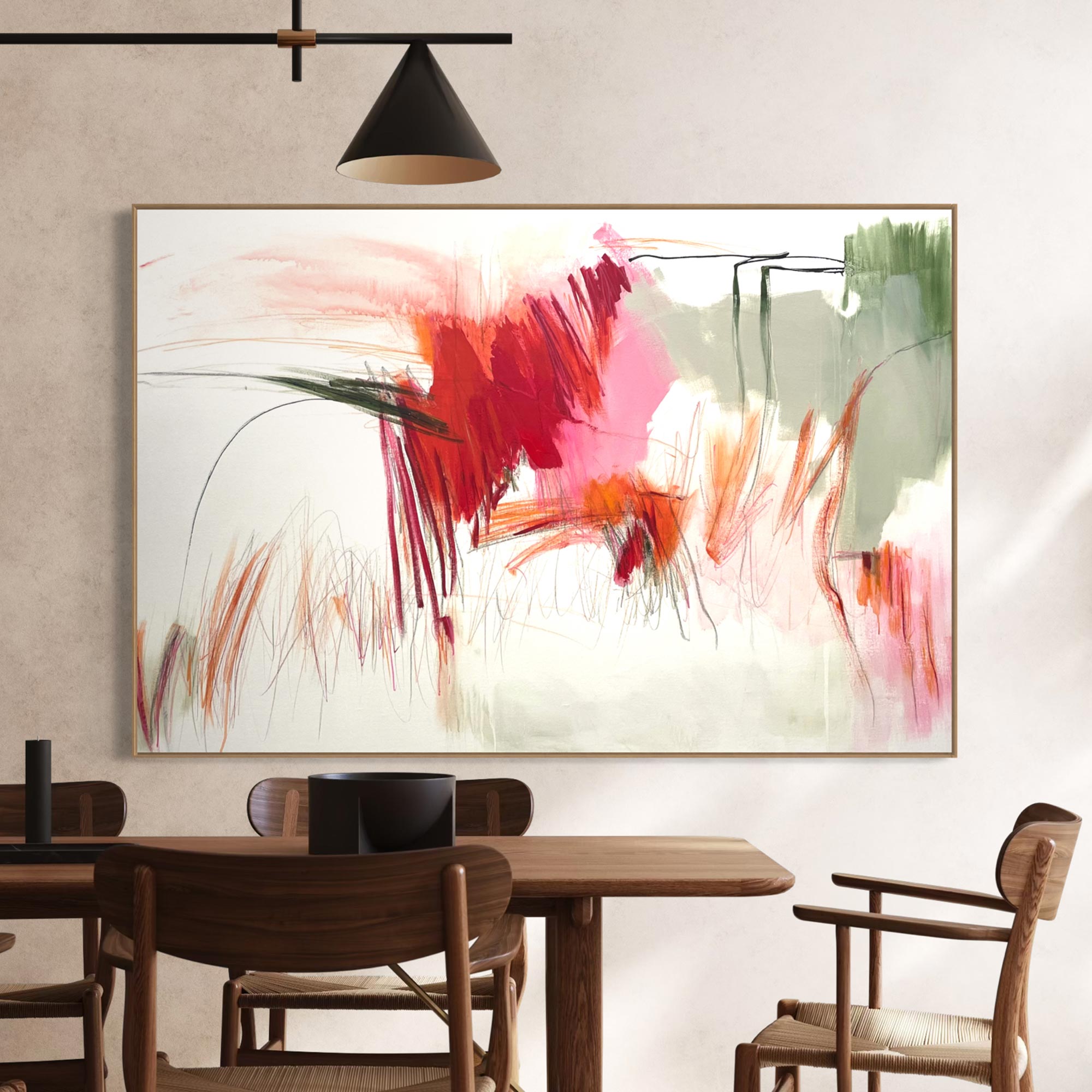
Red Centre by CHERYL HARRISON
Art is an adventure—one of self-expression and discovery. As you deliberate over that next room redesign, consider the power of abstract art to inspire, soothe, challenge, and engage. With thoughtful curation, your room can become a sanctuary for creativity, a platform for reflection, or a dynamic space for shared experience.
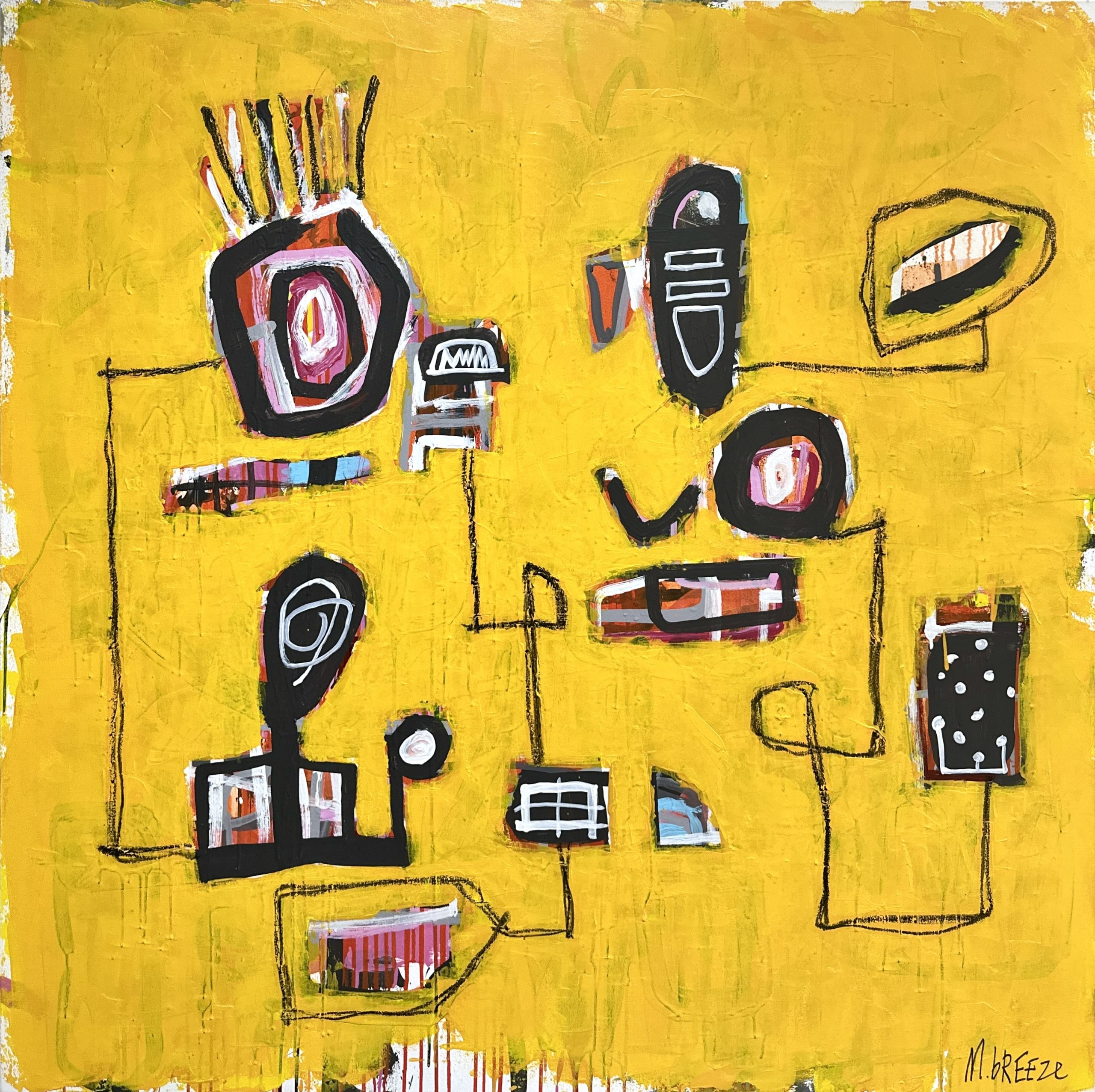
Silly Lily Fairbairn by MARTIN BREEZE
The impact of a well-chosen abstract artwork is profound, often more so than many other components in a room. In it lies the potential to encapsulate an entire ethos—a mood, an emotion, a season—promptly reimagining the room’s function and the experience for those who inhabit it.
In the end, as you introduce a statement abstract piece into your living or working environment, remember: the art you choose is more than just a visual. It’s a composition of feelings, an echo of your own personality, and a bridge to others’ perceptions. It’s a transformation waiting to happen, one brushstroke at a time.
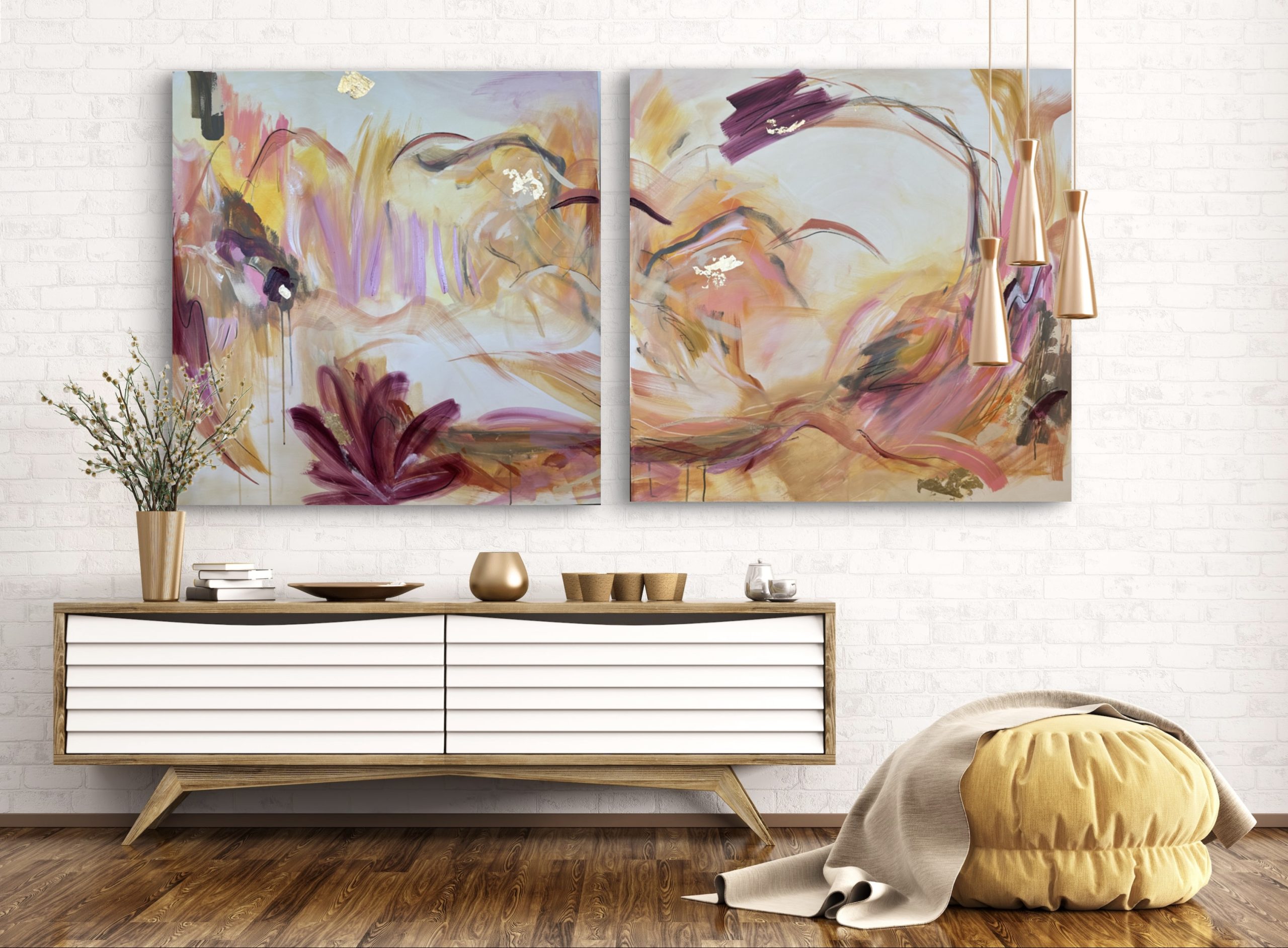
In my wildest dreams by ROOPALI ARORA
Transform your space today with a piece that resonates, and feel the palpable, lasting shift in the atmosphere. In this transient world, art remains the single constant thread that connects all parts of our diverse human spectrum. Remember, it’s not just the room you’re redesigning—it’s an entire experience you’re crafting. Make it remarkable; make it art.
~

 Free delivery Australia wide
 7 Day Satisfaction Guarantee
 Safe & Secure Payments